© Eino
Early Years
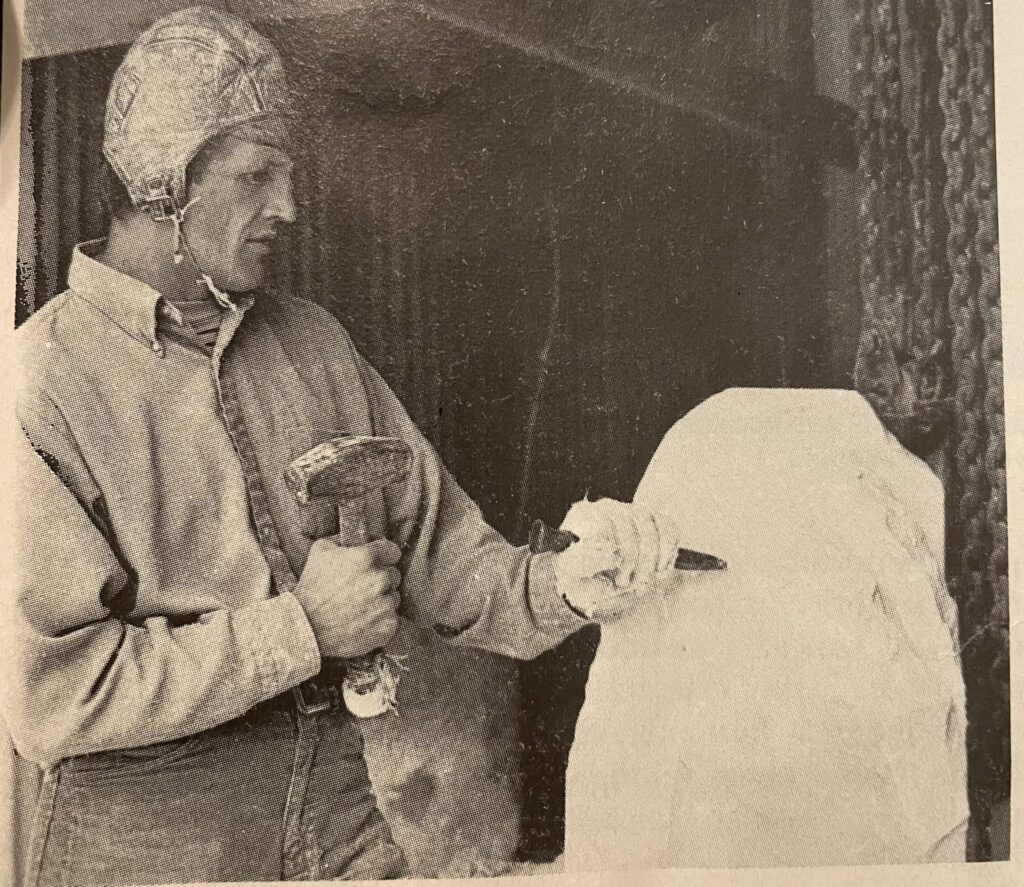
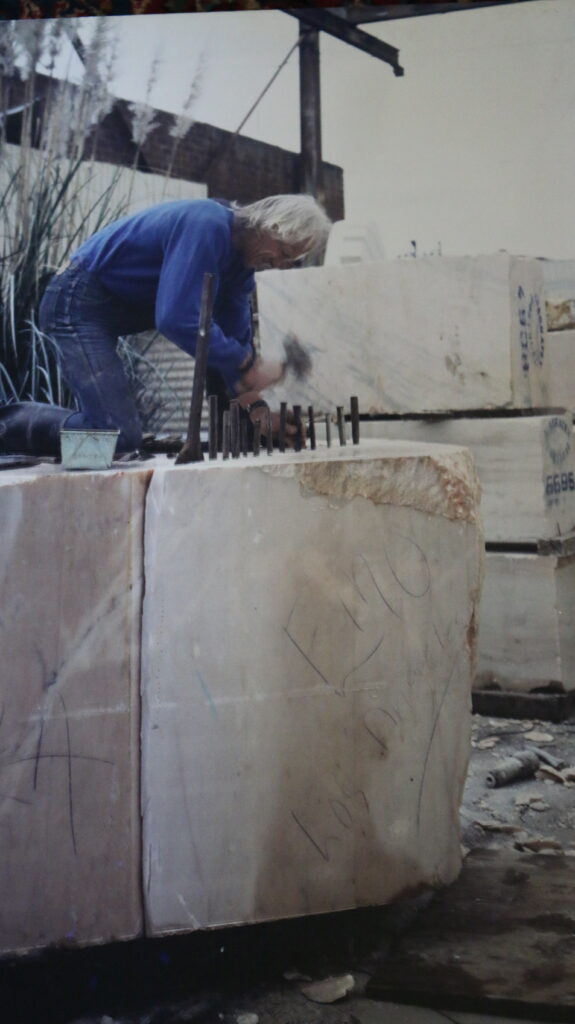
In his native Finland where he was born in 1940, Eino showed an early love for drawing and carving. In 1962, after coming to the United States, Eino realized that his life’s purpose was to sculpt. He devoted most of his adult life to carving marble. Eino’s stone sculptures, numbering in the hundreds, are carved from various marbles including Yule, Georgia, Arizona, California, Vermont, Portuguese, and Italian. He has also worked extensively with Mexican Onyx, using it for one of his largest bodies of work, the “Nature Series.”
©Eino
Journeys
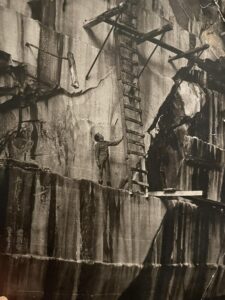
His art emanated from a mind that draws inspiration from and is constantly renewed by nature. In his work, Eino ventured into areas of marble sculpting that had not yet been explored by other sculptors. It is during these “speculative journeys” that Eino created works of art that expressed dimensions of light and space equal in proportion to the mass of the stone. The pieces that emerged from his studio were distinctive because of the delicate balance between positive and negative space within the sculpture.
Negative Space
While many stone carvers incorporate negative space around a piece, Eino often placed it exquisitely inside of the body, resulting in a work, in which the mass seems supported by the space
©Eino
©Eino
Patience
Often considered a difficult, restrictive medium, Eino found marble exciting and challenging. “I am not allowed to make mistakes in marble,” he said. “Marble, like art itself, requires discipline and patience. You cannot rush the process.”
Bronze
The artist completed numerous bronze busts for both public and private collections, as well as several life-size bronze figures. Eino was one of the few artists who did all of his own bronze casting. He believed that the more he learned of the technical aspects of his work, the freer he could be in the creative process.
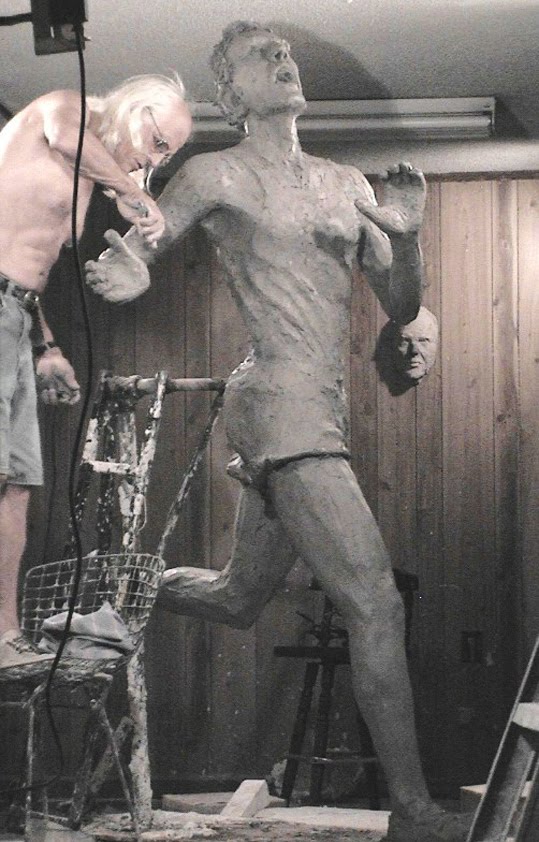
©Eino
Once again seeking to “push the envelope,” Eino set for himself a new challenge within this medium. In one project, he endeavored to produce a life-size figure in a single pour. Other artists have rarely, if ever, attempted this.
Physical and mental intensity
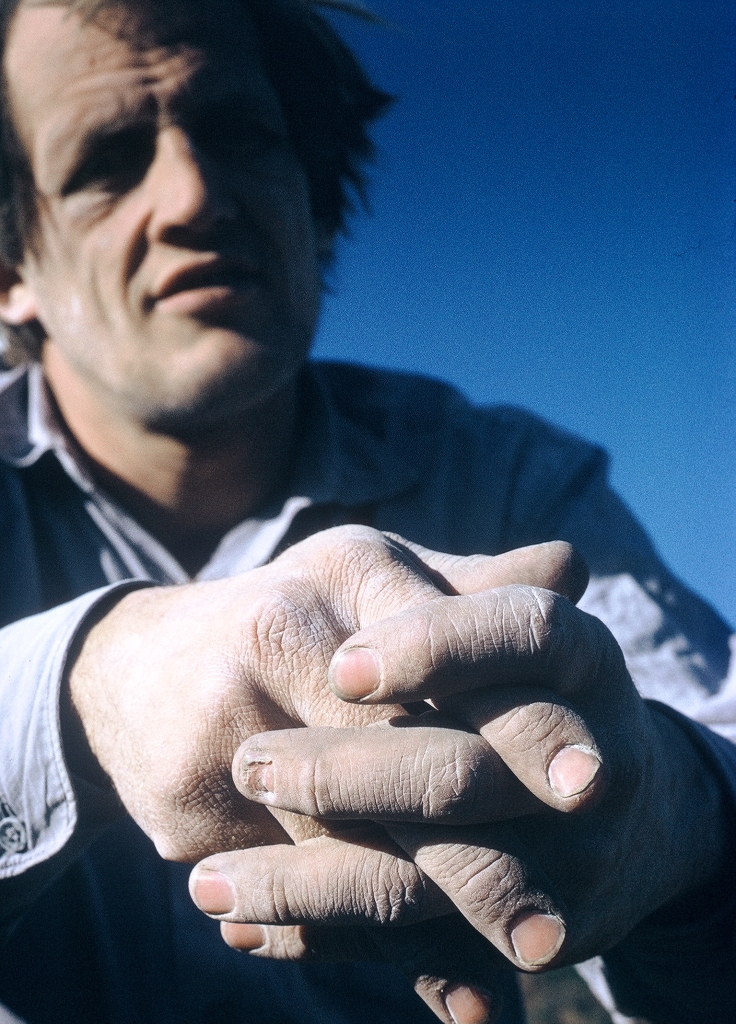
Eino used his body as a tool for his art. To balance the physical and mental intensity of marble sculpting, the artist used daily long-distance running and a well-balanced diet as part of his personal maintenance. His creative planning often began during these early morning runs in the deserts of southern Nevada. Running freed his mind to create, to reflect, and to be inspired by the land and its beauty.
Finland his Native Country
Eino also resided in Finland during the warmer months of the year for the last 15 years of his life where he created granite sculptures. His last unveiling was in Seinäjoki in December 2017. The work titled “Suomineito 100” was in honor of Finland’s 100-year anniversary of independence as an independent country. Eino explained; “The pedestal of the sculpture depicts the sacrifices required for Finland’s independence. A black granite pedestal depicts the grief and Karelian red granite depicts the bloodshed for our independence. You can go through the sculpture. In this way, everyone can reflect in their own way on Finland’s past and future, our 100 years of independence, and the freedom it brings.” Eino was so proud to have his work recognized in his native country for such a special memory.
Provenance
Eino’s Legacy & Historical Archives – A Legacy Preserved Through History
Throughout Eino’s lifetime and beyond, his work has been documented in more than 270 newspaper publications across the world, including the United States, Finland, Sweden, Canada, Japan, London, and the Netherlands. Our archives continue to preserve this valuable historical record.
Have you come across a newspaper article, publication, or historical reference to Eino’s work? We invite you to contact us so we can check whether it is already part of our archives.
Exhibitions, Demonstrations & Public Recognition
During his lifetime, Eino participated in 68 demonstrations, talks, and exhibitions showcasing his work. His artistic legacy continues to attract interest and recognition to this day.
Authenticity & Provenance
We maintain Certificates of Authenticity for Eino’s works, along with detailed historical records documenting their provenance, ownership, and locations whenever available. These records help preserve the history and authenticity of each piece.
If you are considering buying or selling a work by Eino, please get in touch with us. We welcome enquiries and are happy to assist with verifying authenticity and researching the history of individual works.
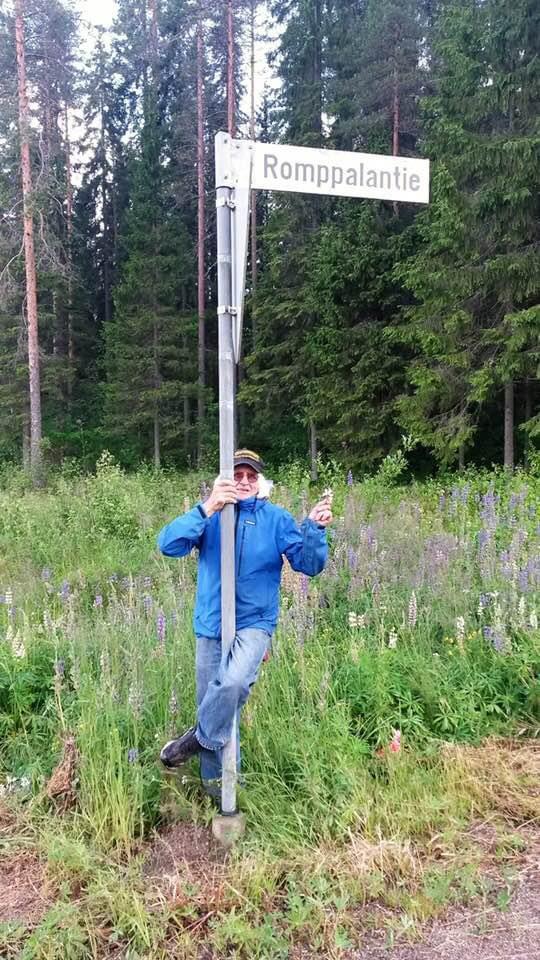
Eino died in Nevada USA on May 28, 2018 his daughter and Grandson continue to manage the history and dedicate their time to preserving the history of his art.